

Could Your Dental Practice Pass a Cybersecurity Checkup?
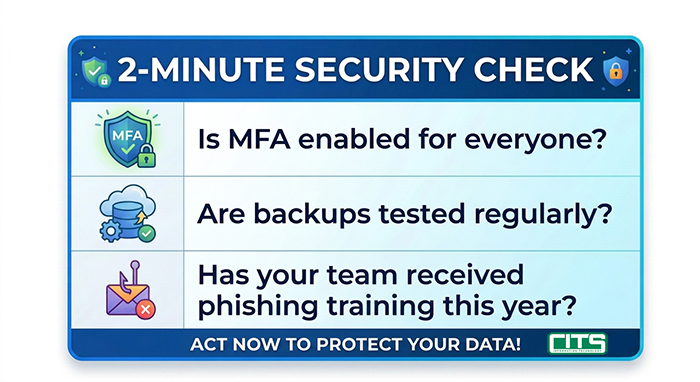

Every day, dental practices trust technology to schedule patients, process insurance claims, and protect sensitive health information. Unfortunately, cybercriminals know that too.
The good news? You don’t need a large IT department to dramatically reduce your risk. Here are three simple things every dental practice can do today:
1. Turn on Multi-Factor Authentication (MFA)
If your team logs into Microsoft 365, Google Workspace, cloud practice software, or remote desktops, MFA should be enabled. It adds one extra verification step and can stop many account takeover attempts before they start.
 |
RESOURCE: 3 Crucial IT Tips for Dentists Starting or Buying a Dental Practice |

2. Make Phishing Awareness Part of Your Practice’s Culture
Most cyberattacks begin with a convincing email. Encourage your team to slow down before clicking unexpected links or opening attachments—especially messages that create urgency or ask for passwords, payments, or patient information. Even a few minutes of ongoing staff education can make a big difference.
3. Verify That Your Computer Backups Actually Work
Backups are only valuable if they can be restored. Regularly testing backups and keeping systems updated can significantly reduce downtime if ransomware or hardware failures occur.
At CITS Information Technology, we work with dental practices to keep technology secure, reliable, and running smoothly—so your team can focus on providing excellent patient care.
If you’d like a complimentary review of your practice’s current cybersecurity readiness, we’d be happy to help identify any easy improvements with no obligation.
|
MORE: IT Dental Practice Solutions |